ServicesSiding
Siding Repair and Replacement in Walton
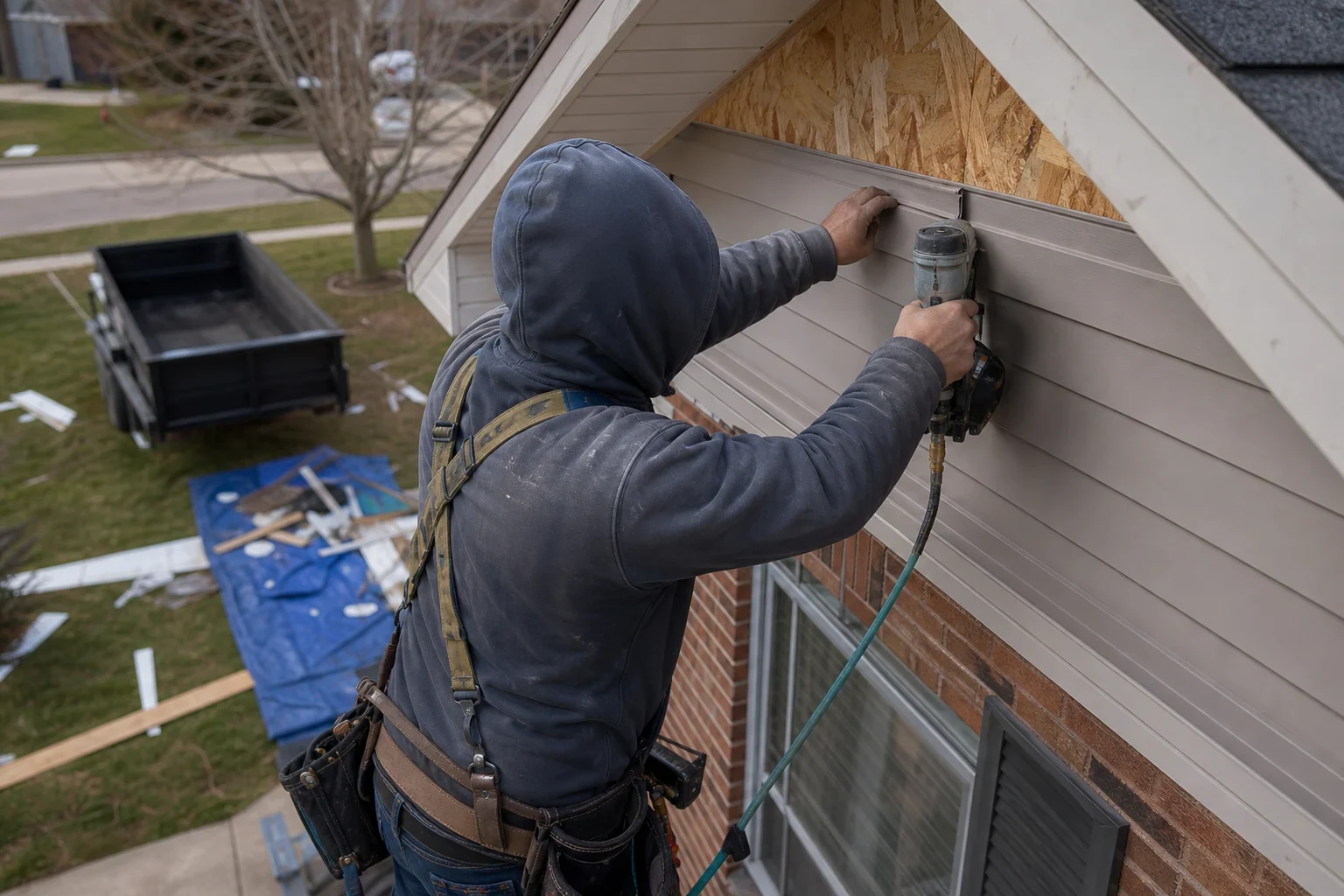
Cracked, warped or loose siding lets water reach the sheathing behind it. We find where moisture is getting in, repair or replace the panels with the right wrap and flashing underneath, and keep your landscaping and walkways protected until the last nail is swept up.
What Siding Work Actually Fixes
Siding is a rain screen, not a waterproof shell. Some water always gets behind vinyl or fiber cement panels. The housewrap and flashing underneath are what send it back out at the bottom of the wall. When panels crack, pull loose or were installed without proper flashing, that water sits against the OSB or plank sheathing and starts to rot it.
Sometimes a few panels and a corner post solve the problem. Other times the wrap is torn, the window flashing was skipped and the sheathing is soft, and patching only hides it. We pull a test section when we need to, show you what is behind it and tell you which job your walls need.
What Our Siding Work Includes
- 01
Panel repair and matching
We replace cracked, holed or melted vinyl panels and damaged fiber cement boards. We bring sample pieces to match profile, exposure and color as closely as the product line allows, and we tell you before work starts if an exact match is not available.
- 02
Housewrap and sheathing
On replacements we strip to the sheathing, replace any rotted OSB or boards, and install housewrap lapped shingle-style so water runs down and out, never behind a seam.
- 03
Window, door and kickout flashing
Flashing tape around openings and a kickout flashing where a roof edge meets a wall keep water from running into the framing. A missing kickout is one of the most common causes of rot we find under siding.
- 04
Correct fastening for movement
Vinyl grows and shrinks with temperature. We nail in the center of the slot and leave the head slightly proud so panels can slide, which prevents the buckling you see on walls that were nailed tight.
- 05
Trim, J-channel and corners
New starter strip, J-channel, corner posts and trim coil around fascia and windows, cut and lapped so the finished wall sheds water at every edge.
Questions about Siding?
Call(859) 249-9133Signs Your Siding Needs Attention
Wavy or buckled panels
Usually a sign the siding was nailed too tight to move. In hot weather it bows, and the stress eventually cracks the locks.
Cracks and holes after cold snaps
Vinyl turns brittle in hard freezes, so a stray ball or hailstone can punch through it. Any opening lets water straight onto the wrap.
Stains or soft spots below windows
Streaks under a window corner or a wall that gives when you press it often point to failed flashing and wet sheathing.
Peeling paint inside on exterior walls
Blistering paint or damp drywall on an outside wall can mean moisture is passing through the siding layer.
Loose panels after wind
A panel that unlocks in one storm usually means the fasteners or nailing hem are failing along the whole course.
How a Siding Job Runs at Your Home
- 1
Free estimate and wall check
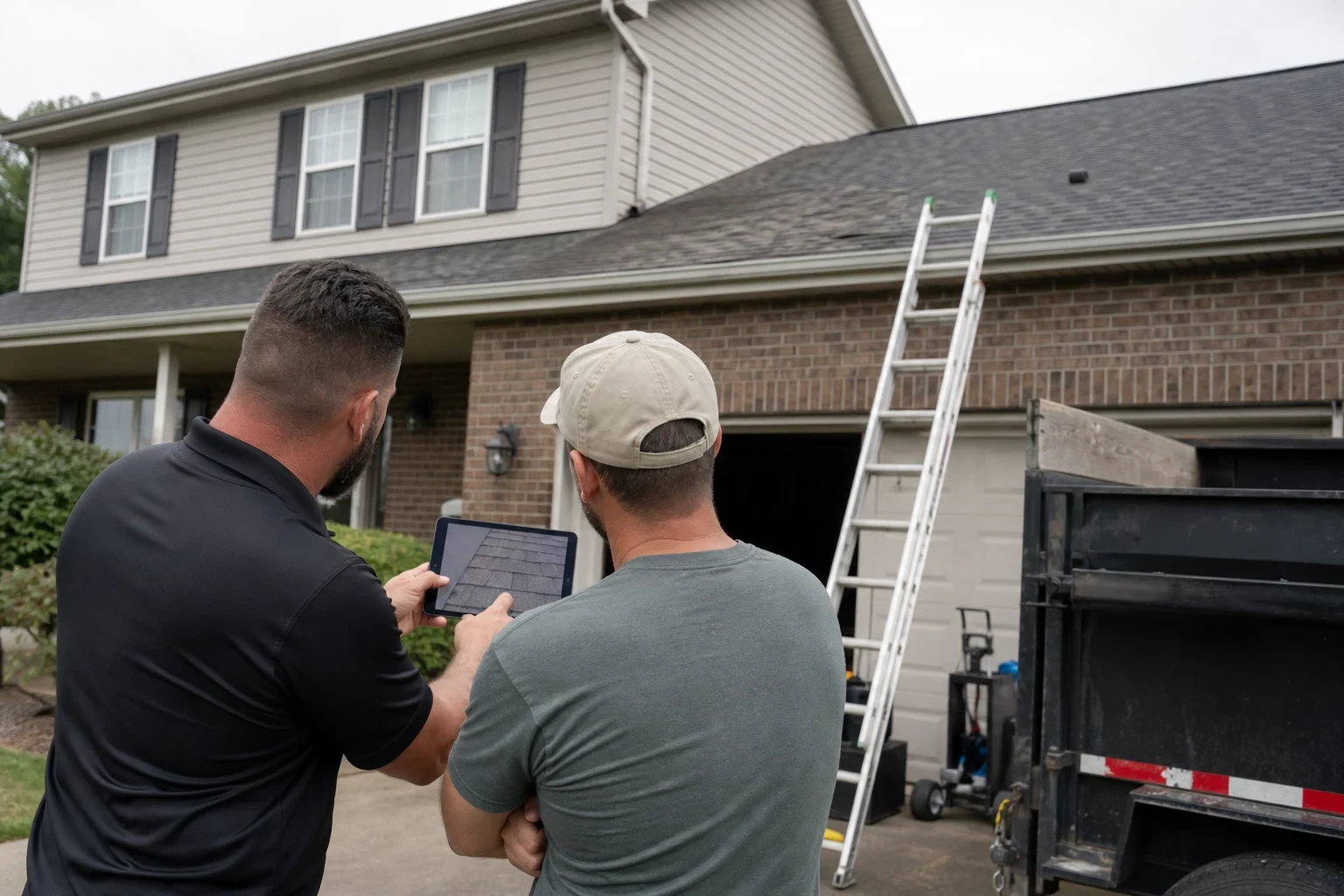
We walk every elevation, probe suspect spots, check flashing at roof-to-wall joints and photograph what we find. You get a written scope that separates repair from replacement.
- 2
Protecting the yard first
Before a panel comes off, we lay tarps over beds and shrubs, set ladder standoffs so rails stay off gutters and windows, and place our cutting station away from the house. We tell you which walls we will be on each day so you know which windows and doors to avoid.
- 3
Tear-off, repair and install
Old panels come off in sections so walls are not left open overnight. Rotted sheathing is replaced, wrap and flashing go on, then trim and new panels. If we find damage not in the scope, we stop and show you before going further.
- 4
Cleanup and walkthrough
We run a magnetic sweeper across the lawn and drive, haul off scrap and walk the finished walls with you. Our crew is licensed and insured, and the work is backed by our 10-year labor warranty.
What Moves the Cost of Siding
Siding is priced by the wall area covered and by what has to happen underneath. Two houses the same size can come out very differently once the sheathing and flashing are opened up. Your written estimate lists each of these items so nothing appears later as a surprise.
- Material
- Vinyl, insulated vinyl and fiber cement differ in product cost and labor. Fiber cement is heavier, needs special cutting and is painted after install.
- Wall area and height
- Square footage drives material. Two-story walls, gables and steep grades need more staging and time.
- Condition behind the panels
- Rotted sheathing, missing wrap or no window flashing adds labor and material that cannot be priced until a wall is opened.
- Trim and openings
- Every window, door, vent and corner means more cutting, flashing and trim coil. A wall with many openings costs more than a plain one.
Siding Questions We Hear Often
Can you match my existing vinyl siding for a small repair?
Often, yes. We take a piece to compare profile, exposure and color against what manufacturers still make. Faded siding rarely matches new panels exactly, so we sometimes suggest pulling good panels from a hidden wall for the front and putting the new ones out of sight.
Should I repair or replace my siding?
If the damage is limited to a few panels and the wrap and sheathing behind them are sound, repair makes sense. If panels are brittle across the house, the wall is buckling everywhere or we find widespread rot, replacement is the better use of your money. We show you photos of what we find so you can judge it yourself.
Is your siding work covered by a warranty?
Yes. Siding we install is covered by our 10-year labor warranty. The panels themselves carry whatever warranty their manufacturer provides.
Will you damage my plants and flower beds?
We cover beds and shrubs before we start and keep scrap off them. Ladders stand on pads, and cut pieces go straight into a bin rather than onto the grass. If a plant sits tight against a wall, we talk with you about tying it back or moving it for the job.
Do I need to be home while you work?
No, but we like to start the first morning with you so we can agree on access, parking and any pets. After that, we let you know each day which side of the house we are working on.
Find Out What Is Behind Your Siding
We will check your walls, flashing and trim, show you photos and give you a written scope with repair and replacement laid out separately.