ServicesGutters
Gutter Installation and Repair in Walton, KY
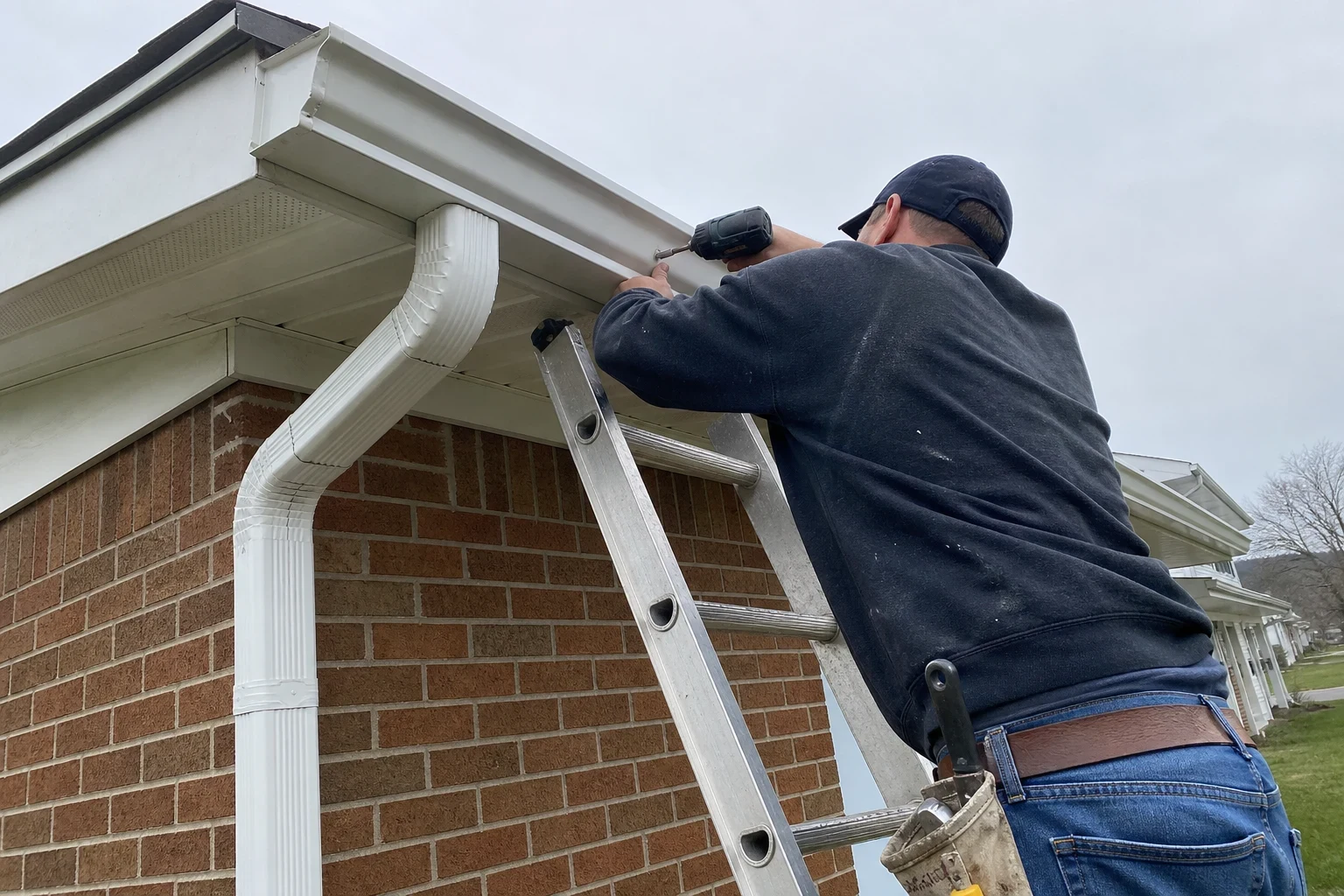
We size, pitch and hang gutters so rain off your roof lands well away from your foundation. Ladders go on padded stand-offs and drop cloths cover your beds. Before we leave, we walk you around your home and show you where every downspout drains.
How Gutters Protect Fascia, Siding and Foundation
A single heavy storm sends hundreds of gallons off an average roof, and all of it reaches the eaves first. Gutters catch that runoff along the roof edge and hand it to downspouts, which release it far enough out that it never soaks the fascia, streaks the siding or pools at the foundation. When a run is undersized, sagging or sloped the wrong way, water spills over the front lip, rots the fascia board and settles against the basement wall.
We install new aluminum gutters formed in one piece per run, replace failing sections and correct pitch and hanger problems on systems that are basically sound. We also look at the roof edge while we're up there, because a missing drip edge or rotted fascia will undo a new gutter in a few seasons. Freeze-thaw winters put extra load on hangers, so how a gutter is fastened matters as much as the gutter itself.
What Our Gutter Work Includes
- Continuous runs formed on site
- A portable machine rolls aluminum coil into gutter cut to the full length of each run. Joints only occur where a run turns a corner or stops at an end cap, which leaves very few spots for water to work through.
- Correct size for your roof
- We choose between 5-inch and 6-inch K-style based on roof area and pitch. Steep, large roof planes often need the larger profile and 3x4 downspouts to keep up with a heavy spring storm.
- Hidden hangers screwed into framing
- We fasten with hidden hangers and screws driven through the fascia into the rafter tails, roughly every two feet. Spikes and ferrules loosen as wood swells and shrinks; screws hold.
- Pitch set for steady flow
- Each run slopes toward its downspout at about a quarter inch per ten feet. That is enough to drain without the gutter looking crooked from the street.
- Downspout discharge away from the foundation
- We add extensions or splash blocks so water leaves several feet from the wall. We mark the discharge points with you so mowing and planting don't block them.
- Fascia and drip edge check
- Soft fascia gets replaced before new gutters go up. If the roof edge lacks drip edge, we explain why it matters and price it separately.
Signs Your Gutters Need Attention
Water pouring over the lip
If rain spills over the outer edge during an ordinary shower, look for debris blocking the outlet, a run sloped away from its downspout, or a profile too narrow for the roof plane feeding it.
Sagging or pulled-away sections
A run that dips between hangers holds standing water and ice. The added weight pulls fasteners further out of the fascia each winter.
Blistered paint on the fascia board
Dark tracks or peeling paint just behind the trough mean water is creeping back under the roof edge instead of dropping into the gutter. Given a few seasons, that board softens and rots.
Washed-out mulch or a damp basement
Trenches in your beds below the roof edge, or moisture along one basement wall, often trace back to a downspout dumping water too close.
Leaking seams and corners
Drips at the miters of older sectional gutters mean the sealant has failed. Resealing can buy time, but repeated failures favor replacing them with one-piece runs.
What Moves the Price of Gutters
After we measure, you get an estimate with each item on its own line. The two biggest drivers are the total footage of gutter and the effort it takes to reach your eaves safely. If this is your first service call with us, ask about our Limited Time — $50 Off Your First Service Call offer.
Linear footage and corners
Longer runs and more inside and outside miters add material and labor.
Gutter size and downspout count
Six-inch gutters and 3x4 downspouts use more aluminum than 5-inch with 2x3, and each added downspout adds its own outlet and extension.
Height and access
Two-story eaves, steep slopes in the yard and tight side setbacks take more setup time.
Fascia condition
Rotted fascia must be replaced before new hangers can hold, and we can't always see how far the rot goes until the old gutter is off.
Guards and extras
Gutter guards, underground drain connections and drip edge are optional items priced on their own lines.
How a Gutter Job Runs
- 1
Measure and look at the roof edge
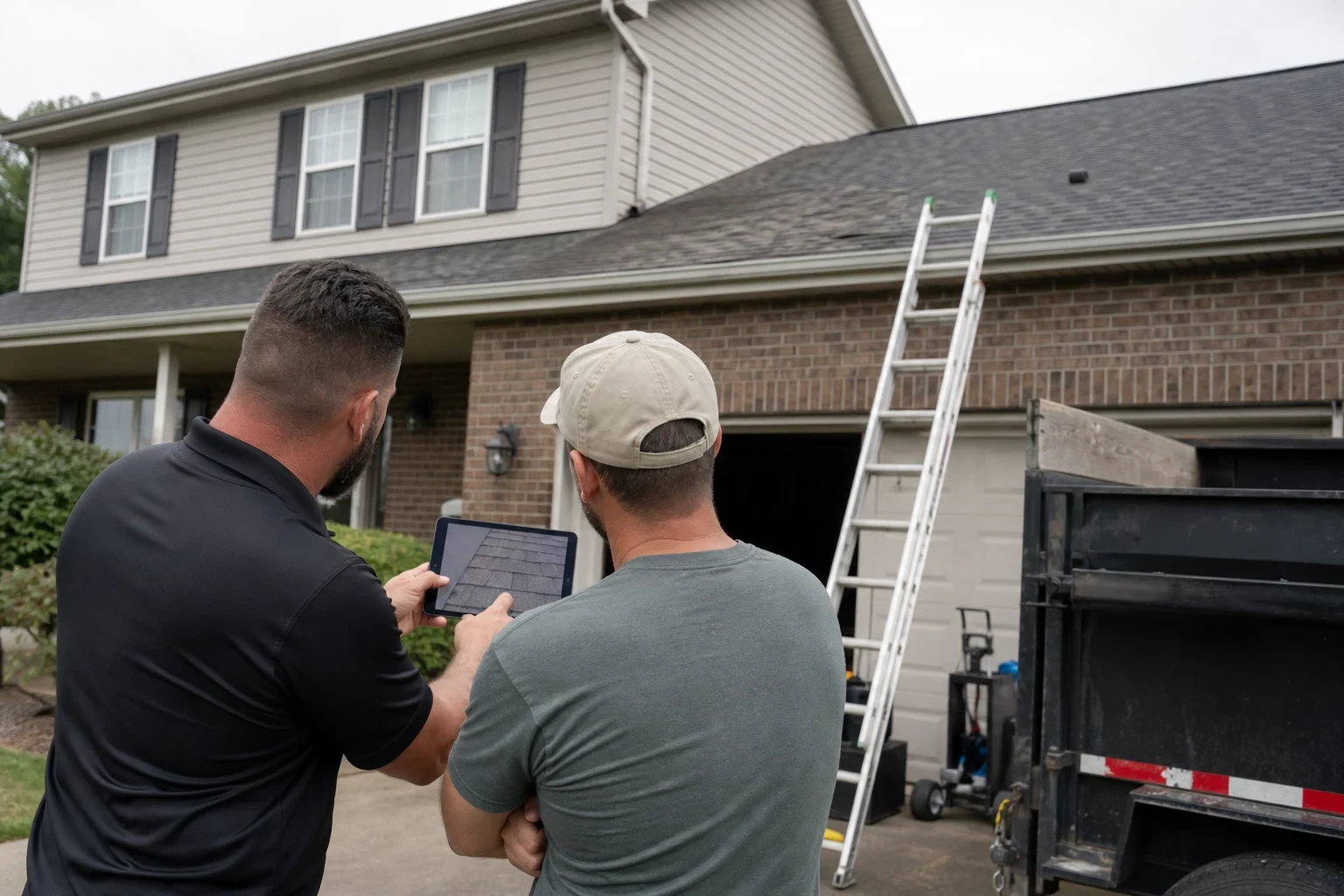
We measure every run, count downspouts and check fascia, soffit and drip edge. You get a written estimate that lists each item separately.
- 2
Protect your home before work starts
Drop cloths go over beds and shrubs under each run, and ladders rest on stand-offs so they never touch your siding. We tell you which doors and driveway space we'll need that day.
- 3
Remove, repair, then hang
Old gutters come down, any rotted fascia is replaced, and the new runs are formed, pitched and screwed into place. Downspouts are strapped to the wall at each section.
- 4
Water test and cleanup
We run a hose in each gutter to confirm flow and check every joint. Then we pick up old fasteners and scraps with a magnet sweep and haul away the old metal.
Common Questions About Gutter Work
Is it worth fixing my old gutters, or should they come down?
Fixing makes sense when the aluminum is still sound and the trouble comes down to a couple of loose hangers, a run pitched backward or one corner that drips. Once runs are dented, corroded through or leaking at several joints, new gutter is the better value over time. We show you photos of what we found and tell you which way we'd go.
Do I need gutter guards?
It depends on how many trees hang over your roof. Homes under mature oaks and maples often benefit, while a house with open sky may not need them. Guards reduce cleaning but do not eliminate it, and we'll tell you that plainly.
Will new gutters stop my basement from getting wet?
They help when the water source is roof runoff landing near the wall. Moving discharge several feet out is often enough. If the grade slopes toward the house, we'll point that out so you know gutters alone may not solve it.
What happens if something you installed fails?
Our gutter installations carry a 10-year labor warranty. If a hanger or joint we put up fails because of our workmanship, we come back and fix it. We're also licensed and insured, so the work on your home is properly covered.
Do you do gutters along with roof or siding work?
Yes, and it often saves a second setup. If your roof replacement or siding project is coming up, we can plan the gutters to go on after so the drip edge and trim are finished first.
Get Your Gutters Draining the Way They Should
Describe the overflow, sag or drip you've noticed, and we'll pick a time to come measure. You'll get a written estimate and a clear plan for protecting your yard on the day.